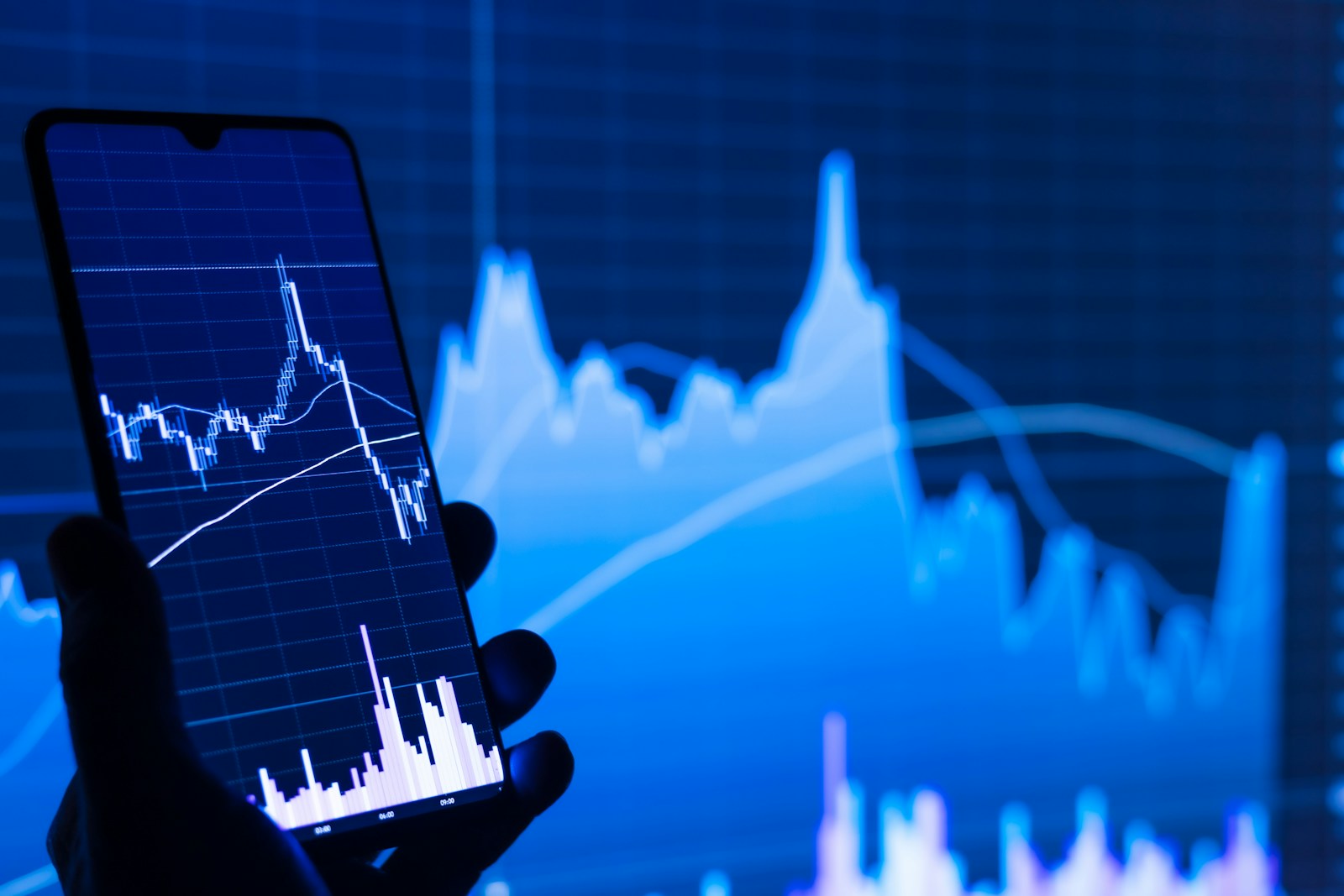
Open your trading screen on a calm mid-morning and you’ll see quotes flicker, sizes shuffle, and prices inch into balance. That choreography is no accident. The rise of algorithmic trading, supercharged by AI, is quietly rewriting how liquidity forms, moves, and disappears. If you participate in markets in any way, you’re interacting with machine-driven decisions that influence your fills, your slippage, and the risk you carry between clicks. In this piece, you’ll unpack what market liquidity really means now, how AI-driven algorithms operate, the measurable effects you can observe, and the guardrails you should want in place as models get smarter. By the end, you’ll know where liquidity helps you, and where it can turn on you.
What Market Liquidity Means Today
Dimensions of Liquidity: Tightness, Depth, Resilience
When you say a market is “liquid,” you’re talking about three related qualities. Tightness is the cost to trade now, the bid-ask spread and immediate price slippage. Depth is the real capacity behind the quotes, how much you can trade at or near the current price before the market moves. Resilience is how quickly prices and order books recover after a shock. You care about all three. Tight spreads are nice until you hit a thin book and your order eats through several price levels. And depth without resilience can vanish right when you need it.
Today’s liquidity is algorithmic by default. Market makers continuously rebalance risk, adjust quotes, and toggle exposure with microsecond precision. On calm days you enjoy narrower spreads, more displayed size, and fast reversion after small shocks. On volatile days, you see how conditional that liquidity is, quotes widen, resting size gets pulled, and resilience gets tested.
How Liquidity Is Measured
You can observe liquidity in several concrete ways:
- Quoted and effective spreads: what you see versus what you actually pay after execution.
- Depth at the top of book and across multiple levels: the true cushion behind the touch.
- Market impact: price change per unit of traded volume, often modeled with concave impact curves.
- Order book resiliency: time-to-replenish after a trade or cancellation.
- Slippage versus benchmarks: how your fills compare to VWAP, TWAP, arrival price, or implementation shortfall.
For a practical view, track your realized spread and adverse selection, the price move after your trade. If the market often runs against you post-fill, you’re paying for liquidity that was smarter than you. That’s the AI edge showing up in your P&L.
From Rules to Learning: How AI-Driven Algorithms Trade
Market Making and Inventory Optimization
Traditional market making followed rule-based playbooks: quote around a fair value, hedge deltas, cap inventory. AI refines those rules in real time. Reinforcement learning and adaptive control models learn the state of the tape, volatility regimes, order flow toxicity, cross-asset correlations, and adjust spread widths, skew, and size dynamically. You’ll see quotes thicken when flow looks benign and evaporate when toxicity rises. The objective is simple: maximize quote capture while minimizing adverse selection and inventory risk. In practice, that means AI systems constantly re-estimating fair value, expected short-term drift, and the cost of being picked off.
Smart Order Routing and Execution Algos
On the buy side, AI shows up in how your orders traverse the market. Smart order routers evaluate dozens of venues and dark pools, factoring in latency, fill probabilities, hidden-liquidity patterns, and fee tiers. Execution algorithms don’t just slice orders by time: they learn market conditions, queue lengths, microstructure signals like order book imbalance or short-term alpha, and intraday volume curves, to reduce footprint. The goal is less slippage versus your benchmark, not wizardry for its own sake. If your router senses that displayed depth is “ghosty,” it may favor conditional blocks or midpoint dark liquidity. If queues are crowded, it might step back to avoid being last-in, first-out on a fading bid.
News, NLP, and Alternative Data Signals
Price discovery now reacts to information machines digest first. NLP models score earnings call transcripts, headlines, regulatory filings, and even structured alt data for sentiment and surprise. You don’t need science fiction to see the effect: a headline breaks, sentiment models infer direction, and execution algos throttle aggression accordingly. The edge isn’t just speed: it’s context. If a chipmaker’s guide-down coincides with cross-asset weakness in semis and a stronger dollar, AI models can weigh those signals together. And that shapes liquidity immediately, makers widen, momentum traders lean in, and your order suddenly faces a different microstructure than it did five seconds earlier.
Liquidity Effects We Can Observe
Spreads, Depth, and Market Impact
On average, AI-enabled market making has tightened spreads in heavily traded names and popular futures. You benefit most when your trade size fits within displayed and hidden depth. Impact models increasingly account for nonlinearity, your first 10% of the order costs little, the next 10% costs more, and so on. What’s changed is how dynamically impact evolves intraday. If order flow turns toxic, impact per share can jump even as top-of-book spreads look unchanged. That divergence is your tell that liquidity has gone conditional.
Intraday Patterns and Cross-Venue Fragmentation
You can still rely on classic intraday patterns, wider spreads at the open, tighter mid-day, wider around the close, but AI has compressed the transitions. Liquidity provisioning responds faster to volatility spikes and venue-specific signals. Fragmentation matters more now. Hidden liquidity, midpoint books, auctions, and periodic batch matches all create different micro-incentives. Smart order routers that learn venue microstructure can harvest better fills than naïve VWAPs. If you route blindly, you risk interacting with the wrong side of the book, getting filled when toxicity is highest and ignored when it’s lowest.
Case Snapshots: Earnings, Macro Releases, and Stress
Consider earnings season. Seconds before a print, liquidity thins as market makers de-risk. Post-release, NLP sentiment and realized surprise feed into pricing: spreads often widen, then compress as uncertainty clears. Around macro data, jobs, CPI, central bank decisions, latency-sensitive strategies anticipate moves, while inventory-sensitive makers pull back. During stress events, you’ll see the most dramatic pattern: quotes widen, displayed depth collapses, and resilience slows. Some AI systems deliberately stand down, kill switches, volatility filters, or inventory caps trip, leaving you with a market that still trades but at a meaningfully higher cost.
Benefits and New Frictions
Tighter Spreads and Faster Price Discovery
You’ve likely benefited from the day-to-day effects of algorithmic trading. Execution costs in liquid instruments are lower than they were in the pre-decimal era. Quotes update faster and incorporate new information quickly. For issuers, that means more continuous pricing: for you, more reliable fills on routine trades. AI adds nuance by recognizing when to quote aggressively and when to step back, which, paradoxically, improves average conditions even if it withholds liquidity in edge cases.
Liquidity Holes, Herding, and Feedback Loops
The friction shows up when many models learn the same lesson at the same time. If everyone’s toxicity meter flashes red, they all widen or cancel together. You experience that as a liquidity hole, nothing at the touch, thin size a few ticks down, sudden jumps. Herding can also amplify short-term moves: execution algos leaning the same direction can push prices, triggering more signals in a loop. Most days, controls dampen this: some days, feedback wins until circuit breakers reset the board.
The Problem of Adverse Selection
Adverse selection is the cost of being picked off by better information or faster prediction. AI reduces it for liquidity providers by filtering when to show size and at what price. For you as a liquidity taker, it surfaces as slippage after fill. If your post-trade drift is consistently negative, you’re paying the smart side. Techniques to fight it, randomizing slice timing, mixing passive and active orders, exploiting auctions, or using conditional blocks, are essentially ways to confuse the models about your intent and avoid trading exactly when their edge is sharpest.
Guardrails, Design, and What Comes Next
Circuit Breakers, Kill Switches, and Volatility Controls
You should care about the safety rails because they determine whether a bad minute becomes a bad day. Exchange-level circuit breakers pause trading when prices move too far, too fast. Volatility auctions concentrate liquidity, reset queues, and give algorithms time to recompute risk. At the firm level, kill switches and inventory/vega limits stop runaway models. None of these are optional in an AI era, they’re prerequisites for trust.
Transparency, Testing, and Model Risk
AI lives or dies by validation. That means pre-trade simulation against realistic market impact, adversarial backtesting that avoids look-ahead bias, and stress scenarios that reflect regime shifts, not just average days. For your own trading stack, demand explainability where it matters, why did the router choose that venue, why did the maker pull quotes, what signal overrode another? You’re managing model risk as much as market risk. Version control, audit trails, and clear rollback plans aren’t compliance wallpaper: they’re survival tools when a live model behaves differently than its sandbox twin.
The Outlook: LLMs, Agents, and Continuous Auctions
What’s next is already peeking through. LLMs won’t “trade” on their own, but they will digest unstructured information, calls, filings, social chatter, and hand cleaner signals to execution engines. Agentic systems will coordinate tasks: one agent monitors cross-asset risk, another handles venue selection, another manages inventory hedges. On the market design side, you should expect more frequent auctions, midpoint mechanisms, and tools that reward displayed liquidity without punishing risk control. The destination isn’t fewer algorithms: it’s better choreography so liquidity is abundant when information is abundant and parsimonious when uncertainty spikes.
Conclusion
Algorithmic trading, now infused with AI, has reshaped market liquidity from a static property into a living process. You enjoy tighter spreads, faster price discovery, and smarter routing, most of the time. But you also face conditional liquidity, occasional holes, and the tax of adverse selection. If you adapt, by measuring the right things, designing execution that learns, and insisting on robust guardrails, you tilt the odds back in your favor. The rise of algorithmic trading isn’t the end of human edge: it’s a prompt to upgrade how you engage with the market you’re already trading in.
No responses yet